
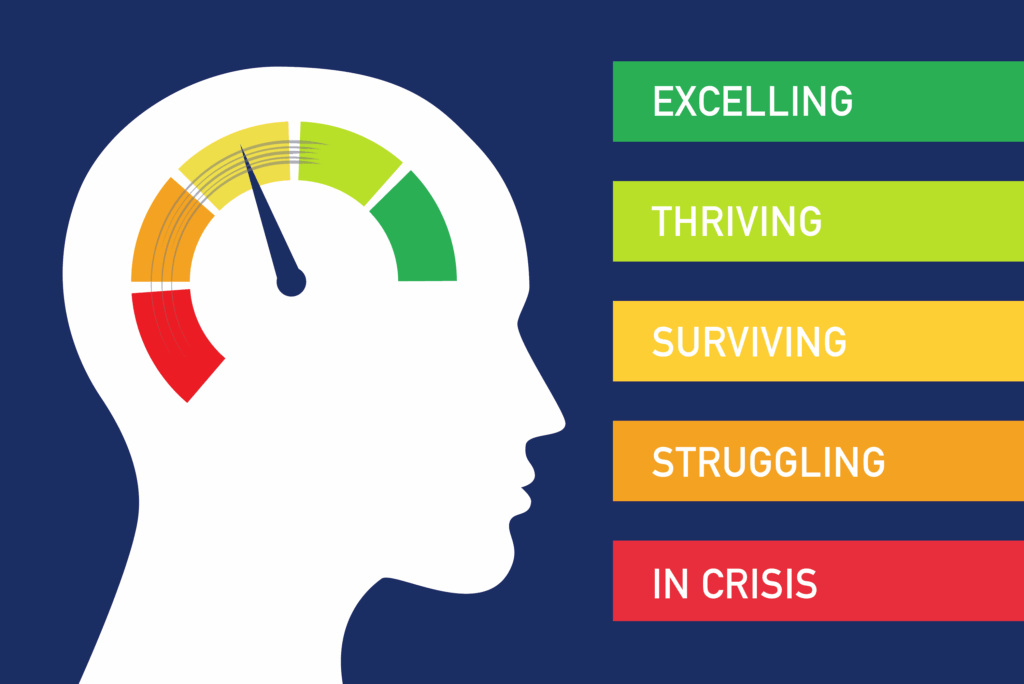
Self- Reliance is an old concept that took formal origin in the mind of philosopher/poet Ralph Waldo Emerson in an 1841 essay. Resilience is a more recent concept, first defined in material science in 1989. For beginners, it is important to know that Resilience and Self Reliance are important for emotional well-being.
Both terms are well-rooted in the psychological awareness of earlier days, but keep coming up in scientific lectures, literature and prognosis of today. Due to their close meaning to an individual’s life, it is important to see how these concepts work and lead to an effective and well-demonstrated presence of emotional regulation in a person’s life.
The term resilience itself derives from the Latin term, “resiliere”, meaning -‘leap back’ or ‘rebound’ was coined in the context of material science referring to physical properties of elasticity and hardiness.
In the early 1980’s, studies on psychological or social adaptation in children helped to determine why some children found success in life despite the presence of adversity such as poverty, neglect and parental illnesses. However, what started as factors rooted in child psychology has today been influential at a community or social level as well.
“Emphasizes resilience as the capacity of a system to absorb disturbance and reorganize while undergoing change so as to still retain essentially the same function, structure, identity, and feedback.”- Folke, C. (2006)
What is resilience in emotional well-being?
Hence, resilience can be relevant in different settings and stages of life.
It includes- (a) Psychological resilience – involves resilience based strategies such as optimism, emotional regulation, flexibility and so on. It is meant to reflect lower levels of depression anxiety and better mental health.
(b) Biological Resilience – Involves body’s physiological response to stress and adversity which involves the response of immune systems, ANS and NES, basically referring to the body’s adaptation and recovery after exposure to stress.
(c) Individual Resilience – Personal attributes that allow the person to withstand or recover from adversity. Examples include- good relationships, self-efficacy, problem solving and the capacity to manage strong emotions and impulses
(d) Community Resilience – Mainly refers to the ability of a community as a whole to respond to disasters or other factors of imbalance in society. Reflects the presence of communities, communication and resources.
(e) Organizational Resilience – An organization’s ability to anticipate, prepare for, respond to, and adapt to incremental change and sudden disruptions in order to survive and prosper.
Hence it can be seen that resilience is an individual or collective response to external factors.
However many see it as a dynamic flow or interplay of combination of factors that occur over time and context.
What is self-reliance?
When it comes to self-reliance, it is basically how an individual decides to push itself in a desired action by relying on itself. In that sense, it is mostly an independent or individual aspect of a person, which occurs in different degrees among individuals.
To understand the aspects of self-reliance, we can look at the following pillars:
- Thinking independently:
This refers to the ability of putting our mind to action for our own selves and not relying on others to get in the way of our own mindset.
- Embracing your individuality:
A choice for the self which helps us determine a unique path for ourselves.
- Striving towards goals, bravely:
Accepting oneself and one’s goals with the willingness to act for the goals set. This does not indicate that one will be isolated from society.
” Do not judge me by my success, judge me by how many times I fell down and got back up again.“-Nelson Mandela
How many times in life have we heard our parents, friends, teachers and others tell us that a single failure is not is the end of the world? Even though resilience is a much larger concept, we cannot ignore the importance of self-reliance in itself.Some effective methods towards self-reliance include:
- Accepting yourself
- Inner Confidence
- Making our own decisions
- Managing dependance
- Having your own values
How does it work?
You are an employee at a company and your boss makes you work extra hours on a frequent basis. Once you asked him for leave and he didn’t grant you that. How to deal with this situation?
Here, the individual is hard-working but not resilient. Why does this person have a problem with my leave is a question that must be bothering him. So he should talk to his boss and explain that he had been working extra hours for many days, without any complaints so he should get the required leave. In this way, the employee makes the boss feel his need to take leave as important without affecting the office work.
We face many such situations in life and it is normal to get anxious.
But if we have our own values, ourselves to be happy about and our own mind and shoulders to support us in times of adversity, we can handle many of life’s challenges effectively.